
6063 Aluminum Alloy Guide: Properties, Extrusion, Applications and T5 vs T6 Selection
Discover the engineering profile of 6063 aluminum alloy. This comprehensive guide covers Mg₂Si precipitation dynamics, T5 vs. T6 tempers, CNC cutting parameters, TIG/MIG welding techniques, and surface finishing protocols.
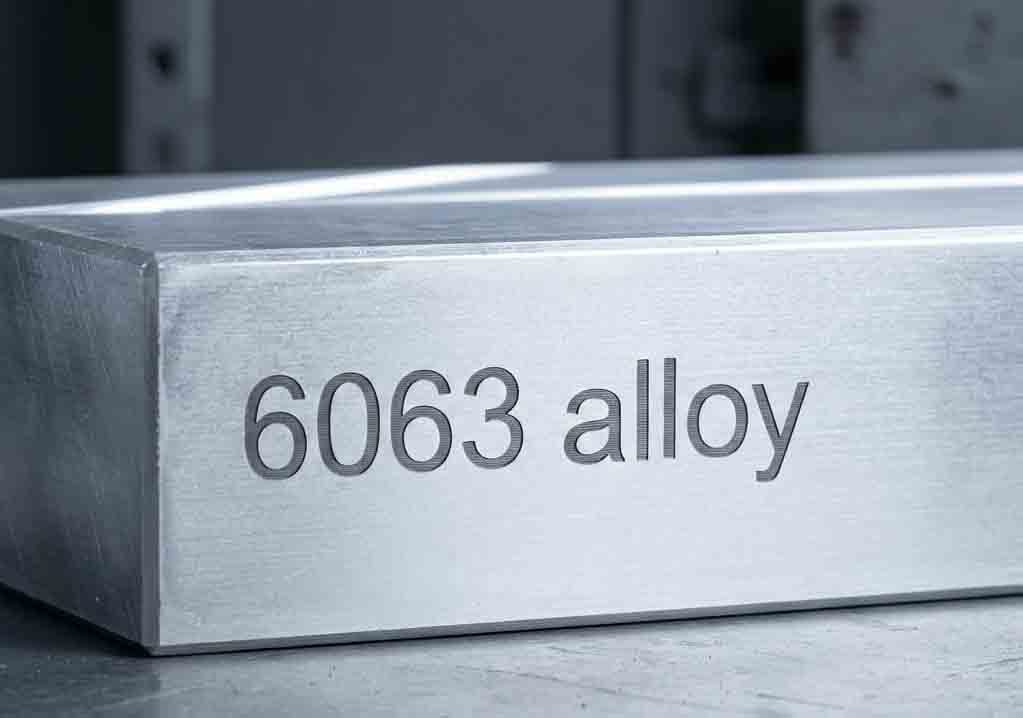
Introduction: Why 6063 Aluminum Remains a Leading Extrusion Alloy
When engineers select an aluminum alloy for architectural or industrial profiles, the decision is rarely based on strength alone.
Manufacturers must consider:
- extrusion efficiency
- dimensional accuracy
- surface appearance
- corrosion resistance
- finishing requirements
- total production cost
This is where 6063 aluminum alloy has maintained its position as one of the most commonly specified aluminum extrusion materials worldwide.
Unlike alloys designed primarily for heavy structural applications, 6063 aluminum was developed to achieve excellent extrusion performance and superior surface quality. Its ability to create complex profiles with smooth finishes makes it the preferred choice for window systems, doors, curtain walls, solar frames, heat sinks, and industrial aluminum profiles.
This guide explains the properties, manufacturing characteristics, temper options, applications, and selection considerations of 6063 aluminum alloy.
What Is 6063 Aluminum Alloy?
6063 aluminum is a medium-strength aluminum-magnesium-silicon alloy belonging to the 6000 series aluminum family.
The main alloying elements are:
- Magnesium (Mg)
- Silicon (Si)
These elements form magnesium silicide (Mg₂Si), which provides heat-treatable strengthening.
The alloy is primarily known for:
- excellent extrusion capability
- high-quality surface finish
- good corrosion resistance
- good weldability
- balanced mechanical performance
Compared with stronger alloys such as 6061 aluminum, 6063 focuses more on manufacturability and appearance rather than maximum load-bearing capacity.
Chemical Composition of 6063 Aluminum
Typical chemical composition:
| Element | Percentage |
|---|---|
| Aluminum | Balance |
| Magnesium | 0.45–0.90% |
| Silicon | 0.20–0.60% |
| Iron | ≤0.35% |
| Copper | ≤0.10% |
| Manganese | ≤0.10% |
| Zinc | ≤0.10% |
| Titanium | ≤0.10% |
The controlled magnesium and silicon content allows manufacturers to achieve:
- stable extrusion performance
- predictable mechanical properties
- excellent anodizing results
Mechanical Properties of 6063 Aluminum
The mechanical properties depend on the temper condition.
Common tempers include:
- 6063-T5
- 6063-T6
6063-T5 Mechanical Properties
| Property | Typical Value |
|---|---|
| Tensile Strength | 160–190 MPa |
| Yield Strength | 110–150 MPa |
| Elongation | 8–12% |
| Hardness | Medium |
6063-T6 Mechanical Properties
| Property | Typical Value |
|---|---|
| Tensile Strength | 190–230 MPa |
| Yield Strength | 160–200 MPa |
| Elongation | 6–10% |
6063-T6 provides higher strength, while 6063-T5 is usually preferred for extrusion efficiency and architectural applications.
Why Is 6063 Aluminum Popular for Extrusion?
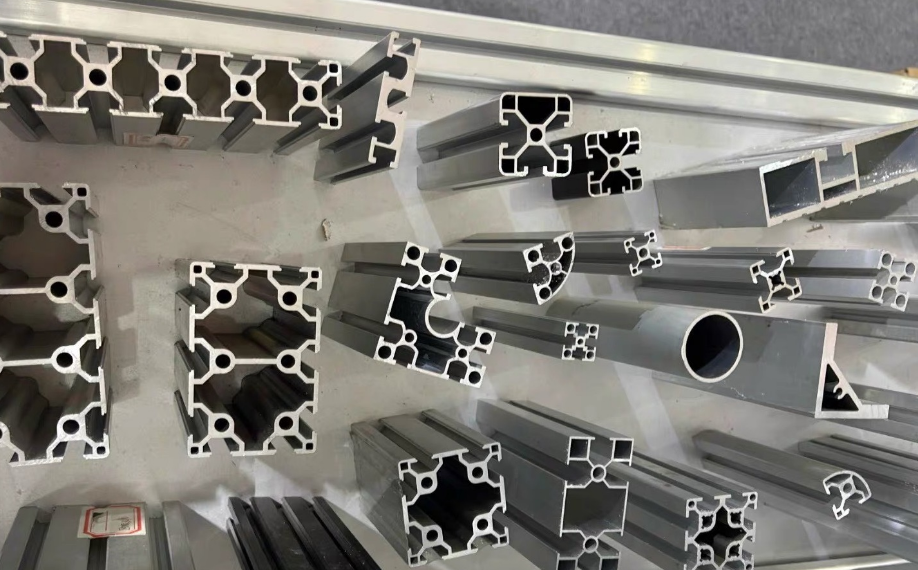
The biggest advantage of 6063 aluminum is its extrusion performance.
During the extrusion process, aluminum billets are heated and pushed through specially designed dies to create specific profiles.
6063 aluminum performs exceptionally well because it offers:
1. Easy Profile Forming
Manufacturers can produce:
- thin-wall sections
- complex shapes
- decorative profiles
- large architectural frames
2. Better Surface Quality
After extrusion, 6063 aluminum usually provides a smoother surface compared with many stronger alloys.
This makes it ideal for:
- anodizing
- powder coating
- electrophoretic coating
3. Lower Manufacturing Difficulty
Compared with harder alloys, 6063 requires:
- lower extrusion pressure
- longer die life
- higher production efficiency
For high-volume aluminum extrusion projects, these advantages significantly reduce manufacturing costs.
6063-T5 vs 6063-T6 Aluminum: Which Should You Choose?
Choosing between 6063-T5 and 6063-T6 depends on the application requirements.
| Feature | 6063-T5 | 6063-T6 |
|---|---|---|
| Strength | Moderate | Higher |
| Extrusion efficiency | Excellent | Good |
| Cost | Lower | Higher |
| Surface quality | Excellent | Very good |
| Common applications | Architectural profiles | Structural frames |
| Heat treatment | Artificial aging | Solution heat treatment + aging |
When to Choose 6063-T5
6063-T5 is commonly selected for:
- aluminum windows
- doors
- curtain walls
- decorative profiles
- solar mounting frames
The reason is simple:
Most architectural applications require accurate dimensions and attractive surfaces rather than maximum mechanical strength.
When to Choose 6063-T6
6063-T6 is suitable when higher strength is required, including:
- industrial structures
- equipment frames
- load-bearing profiles
- engineering applications
Main Applications of 6063 Aluminum Alloy
Architectural Aluminum Profiles
The largest application area of 6063 aluminum is construction.
Typical products include:
- window frames
- door systems
- curtain walls
- railings
- partitions
- decorative profiles
The combination of corrosion resistance and appearance makes 6063 the standard choice for architectural extrusion.
Solar Energy Applications
6063 aluminum is widely used in solar systems.
Examples:
- solar panel frames
- mounting rails
- support structures
Advantages:
- lightweight
- corrosion resistant
- easy installation
Industrial Aluminum Profiles
Industrial applications include:
- machine frames
- automation equipment
- conveyor systems
- protective enclosures
Although 6061 aluminum provides higher strength, many industrial systems choose 6063 because of its better extrusion characteristics.
Heat Sink Applications
6063 aluminum is also used for thermal management components.
Benefits:
- good thermal conductivity
- easy extrusion into complex shapes
- lightweight structure
6063 Aluminum vs 6061 Aluminum
One of the most common questions from engineers is:
Should I choose 6063 or 6061 aluminum?
The answer depends on the application.
| Comparison | 6063 Aluminum | 6061 Aluminum |
|---|---|---|
| Main advantage | Extrusion performance | Mechanical strength |
| Strength | Medium | Higher |
| Surface finish | Excellent | Good |
| Machining | Average | Better |
| Welding | Excellent | Good |
| Architectural use | Excellent | Limited |
| Structural parts | Moderate | Excellent |
Choose 6063 When:
- appearance matters
- extrusion complexity is important
- large-volume production is required
- surface finishing is critical
Choose 6061 When:
- high mechanical strength is required
- heavy loads exist
- machining performance is important
A common mistake is choosing an alloy only based on strength. In many architectural projects, 6063 provides better overall performance because it matches manufacturing and finishing requirements.
Surface Treatment Options for 6063 Aluminum
One reason 6063 is widely used is its excellent response to surface finishing.
Anodizing
Advantages:
- enhanced corrosion resistance
- durable surface
- metallic appearance
Powder Coating
Common colors:
- white
- black
- gray
- custom architectural colors
Benefits:
- weather resistance
- decorative appearance
- long service life
Electrophoretic Coating
Used when manufacturers require:
- smooth appearance
- premium finish quality
- improved durability
Advantages of 6063 Aluminum Alloy
Excellent Extrudability
6063 can produce complex profiles efficiently.
Superior Appearance
It provides one of the best surfaces among extrusion alloys.
Good Corrosion Resistance
Suitable for outdoor applications.
Lightweight
The density is approximately:
2.70 g/cm³
making it much lighter than steel.
Good Weldability
Suitable for many fabrication processes.
Limitations of 6063 Aluminum
Although 6063 is extremely useful, it is not suitable for every application.
Limitations include:
- lower strength than 6061
- limited performance in heavy structural applications
- lower machinability compared with harder alloys
For bridges, heavy machinery components, or high-load structures, stronger alloys may be more appropriate.
How to Select the Right 6063 Aluminum Product
Before purchasing 6063 aluminum profiles, buyers should confirm several important specifications.
1. Alloy and Temper
Confirm:
- 6063-T5
- 6063-T6
2. Surface Treatment
Specify:
- mill finish
- anodized finish
- powder coating
- electrophoresis
3. Dimensional Tolerance
Important factors:
- wall thickness
- profile dimensions
- straightness
- surface quality
4. Quality Documentation
Professional buyers should request:
- Mill Test Certificate (MTC)
- chemical composition report
- mechanical property report
- inspection records
Frequently Asked Questions About 6063 Aluminum
Is 6063 aluminum stronger than 6061?
No. 6061 aluminum generally has higher mechanical strength, while 6063 provides better extrusion performance and surface quality.
Can 6063 aluminum be anodized?
Yes. 6063 is one of the preferred alloys for anodizing because it produces a smooth and consistent surface.
Is 6063 aluminum suitable for outdoor use?
Yes. With proper anodizing or coating, 6063 aluminum performs well in outdoor environments.
Is 6063 aluminum easy to weld?
Yes. 6063 aluminum has good weldability using common aluminum welding methods.
What is the difference between 6063-T5 and 6063-T6?
6063-T6 provides higher strength, while 6063-T5 offers better extrusion efficiency and is more common for architectural profiles.
Final Thoughts: Why 6063 Aluminum Remains Important
6063 aluminum alloy continues to be one of the most important extrusion materials because it successfully balances:
- manufacturing efficiency
- appearance
- corrosion resistance
- mechanical performance
- cost control
For architectural systems, industrial profiles, and precision extrusion projects, 6063 aluminum often provides the most practical solution.
While stronger alloys may outperform it in demanding structural applications, few aluminum alloys match 6063's combination of extrusion capability, finishing quality, and versatility.
That is why 6063 aluminum remains a preferred choice for manufacturers, engineers, architects, and aluminum buyers worldwide.

Comments ()