
Collapsible Aluminium Tube Making Line: A Complete 2026 Procurement Guide
An authentic, expert guide to procuring collapsible aluminium tube production lines in 2026. Learn how to verify factory specs, avoid vendor traps, and calculate total cost of ownership.
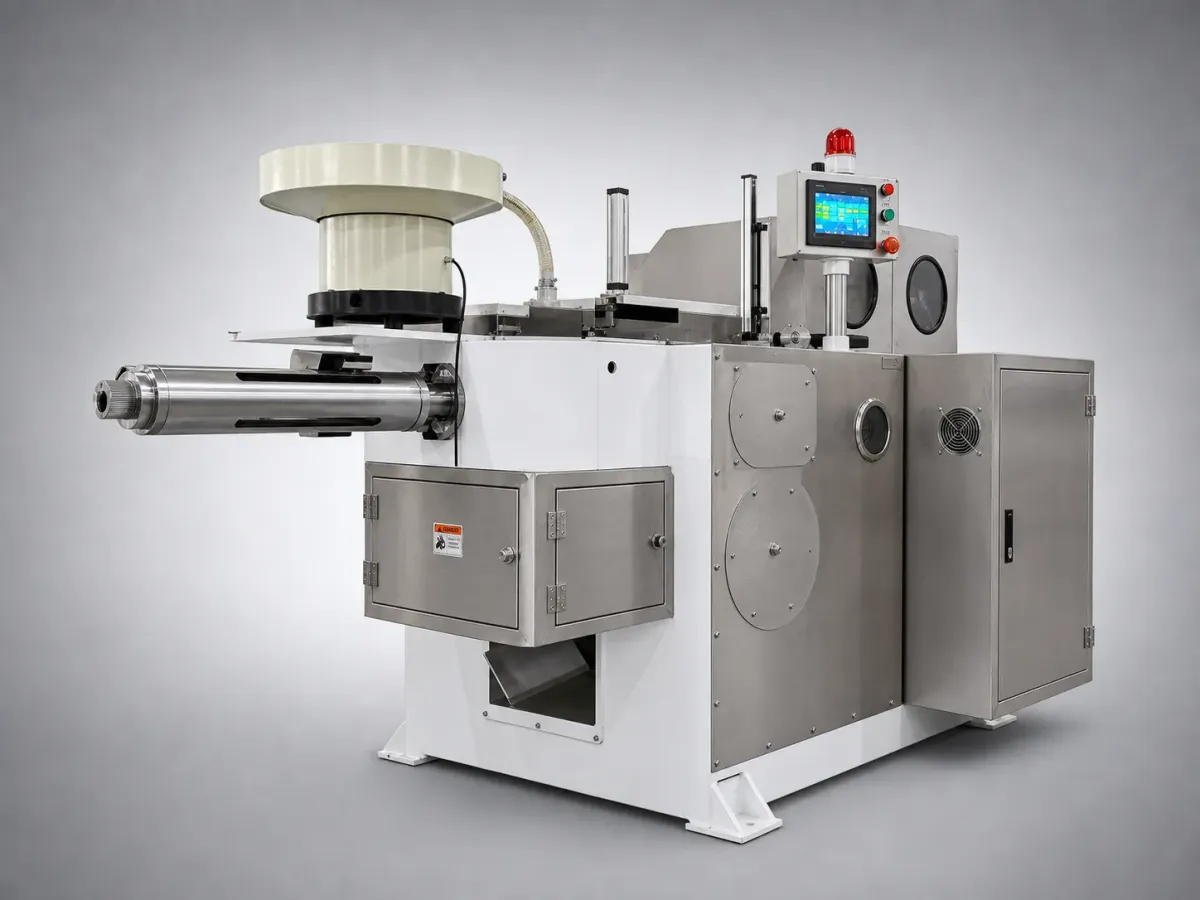
Last year I accompanied a client who runs a small ointment factory in Henan to visit 6 machinery suppliers, he almost bought a second-hand refurbished line marked as "brand new" that would have broken down within 3 months of production. From my 12 years of on-site experience inspecting 17+ aluminium collapsible tube production line factories across Jiangsu and Guangdong, I have seen too many plant managers fall into the exact same traps. Buying a machinery line isn't about picking shiny gadgets from a brochure; it's about buying operational peace of mind.
Whether you are expanding your pharmaceutical packaging capacity or setting up a high-volume cosmetic line, this practical guide will walk you through everything you need to know before putting ink to paper in 2026.
Section 1: What Production Capacity Do You Actually Need?
One of the biggest mistakes I see buyers make is misjudging speed versus real-world monthly yield. You do not always need the absolute fastest line on the market to achieve high output—what you need is an operational match for your actual demand.
| Capacity Tier | Line Speed Standard | Target Monthly Output | Best Fit Applications |
| Small / Entry-Level | 60 pcs/min | ~500,000 tubes/month | Niche cosmetic batches, pilot plants, small pharma |
| Mid-Range Standard | 80–90 pcs/min | 1.5M to 2 million tubes/month | Standard ointment tubes, medium cosmetic lines |
| High-Speed Fully Automatic | 120 pcs/min | 4.8M to 5 million tubes/month | Fast-moving toothpaste, high-volume contract packaging |
Insider Tip 1: The standard line dimension of roughly 45 × 4.2 × 5.3 m is a must-check datum. Many new buyers forget to reserve enough factory space for installation—especially when accounting for overhead gantry platforms housing the curing and polymerization ovens! Always map your ceiling height and clearance walk lanes long before shipping containers arrive.
Section 2: 7 Core Details You Must Verify Before Factory Inspection
When walking the factory floor during an inspection, ignore the polished paint jobs. Look under the hood at these 7 non-negotiable details:
- Control System Architecture: Ensure main controls are backed by Tier-1 brands like Siemens (PLC, drivers, touchscreens).
- Pneumatic & Electrical Switch Components: Verify reliable parts such as Schneider relays, Omron switches, and SMC or FESTO pneumatics.
- Bearing Durability: Premium high-stress spots demand precision bearings (e.g., NTN, NSK, or IKO) to prevent early spindle fatigue.
- Raw Aluminium Sheet (Slug) Thickness Compatibility: Test that the slug elevator and extrusion press handle your specific slug gauge tolerances smoothly without jams.
- Gantry & Oven Structural Rigidity: Thermal insulation on electric annealing and curing ovens must hold temperature evenly to prevent tube deformation.
- Internal Lacquering & Curing Integration: A proper internal coating machine with dedicated curing drying is mandatory to protect against corrosion.
- Line Synchronization: The line must use integrated accumulators to maintain continuous flow between trimming, printing, capping, and latexing stages.

Section 3: How to Distinguish a Qualified Manufacturer from a Trading Company
Trading companies can put together crisp slide decks, but they cannot fix an operational issue when a line jams up at 2:00 AM. Here are 3 actionable checkpoints I use:
- On-Site 2-Hour Full Running Test: Demand a continuous 2-hour dry and wet run at full target speed (e.g., 80–120 pcs/min). A pure trading intermediary will make excuses about raw materials or utility hookups to avoid running the machines.
- Ask for the CE Certificate Original File: Do not accept a low-res JPEG. Check the original file, the issuing body, and verify that the certification explicitly covers the complete line model number.
- Check Past Client Cases in Pharmaceutical Packaging: Ask for verifiable references.
Real Industry Case 1:
A toothpaste manufacturer in Zhejiang bought a 120pcs/min full automatic line in 2025. By implementing a properly calibrated, fully automated setup, they now comfortably produce 4.8 million tubes per month for their domestic market with minimal down-time.
Section 4: Real Budget Breakdown Beyond the Equipment Price
Many buyers budget strictly for the FOB machine cost and end up short on capital when the line hits their factory floor. Here is how your total expenditure actually shapes up in 2026:
- Main Line Investment: $800,000 – $900,000 USD for a standard, fully automated 120pcs/min line with full inline printing, capping, and testing.
- Installation, Training & Spare Parts Reserve: Add 12% to your primary budget. This covers on-site mechanical/electrical setup, technician training, and a 1-year critical wear-and-tear spare parts kit (seals, nozzles, drive belts, and extrusion punches).
- Facility Logistics & Utilities: Allocation for high-capacity electric wiring, compressed air lines, and local plant site prep.
Section 5: After-Sales Traps You Need to Avoid
I once met a client who lost three weeks of production because their equipment vendor offered "lifetime support"—which turned out to be nothing more than basic email replies on a 48-hour delay.
"Online Support Only" vs. "72-Hour On-Site Maintenance"
In this industry, "online guidance" often means a technician pointing at a PDF wiring diagram while your line sits idle losing thousands of dollars an hour. Always contractually secure 72-hour on-site maintenance service in China (or clear local technician dispatch SLA terms abroad).
Core Component Warranty
Ensure your contract clearly mandates a 1-year minimum comprehensive warranty covering core mechanical drives, PLC units, servo motors, and heavy extrusion gearboxes, rather than just basic structural frames.
Section 6: Final 3-Step Checklist Before Signing the Contract
Before you sign on the dotted line, run through these crucial safeguards:
Step 1: Execute a Material Acceptance Test
Insider Tip 2: Ask the supplier to provide free 50kg test aluminium sheets (slugs). Run a 3-hour trial production right at their facility to rigorously check tube wall uniformity, thread accuracy, and tail latex sealing performance.
Step 2: Verify Strict Standard Compliance
Insider Tip 3:
For buyers who produce medical ointment tubes, you must require the whole line to meet the BS 2006-1984 standard for finished aluminium tubes. This ensures mandatory structural wall integrity, non-toxic internal coating compliance, and seal security under pressure.
Real Industry Case 2:
A cosmetic brand from Southeast Asia once ignored the barrier property test of finished tubes. They went with an unverified local supplier to cut costs; finally, 120,000 tubes of hand cream got oxidized in 2 months due to micro-pinholes and poor lacquering, resulting in a huge financial loss and severe brand damage.
Step 3: Final Contract Safeguards
- Itemized Spare Parts List: Ensure every replacement sensor, seal kit, and heating element is clearly listed with part numbers.
- Milestone-Based Payments: Tie final payment releases to successful site acceptance testing (SAT) on your own factory floor.
At the end of the day, a suitable aluminium tube making line is not the one with the most fancy functions, but the one that can run stably 16 hours a day and bring you qualified products for 10 consecutive years.
Comments ()