
UPVC vs. Aluminium Windows: Engineering, Cost, & Performance Guide
A rigorous technical evaluation comparing uPVC and thermally broken aluminium windows. Analyzes thermal conductivity, structural sightlines, site logistics, and lifecycle costs for residential and commercial builds.
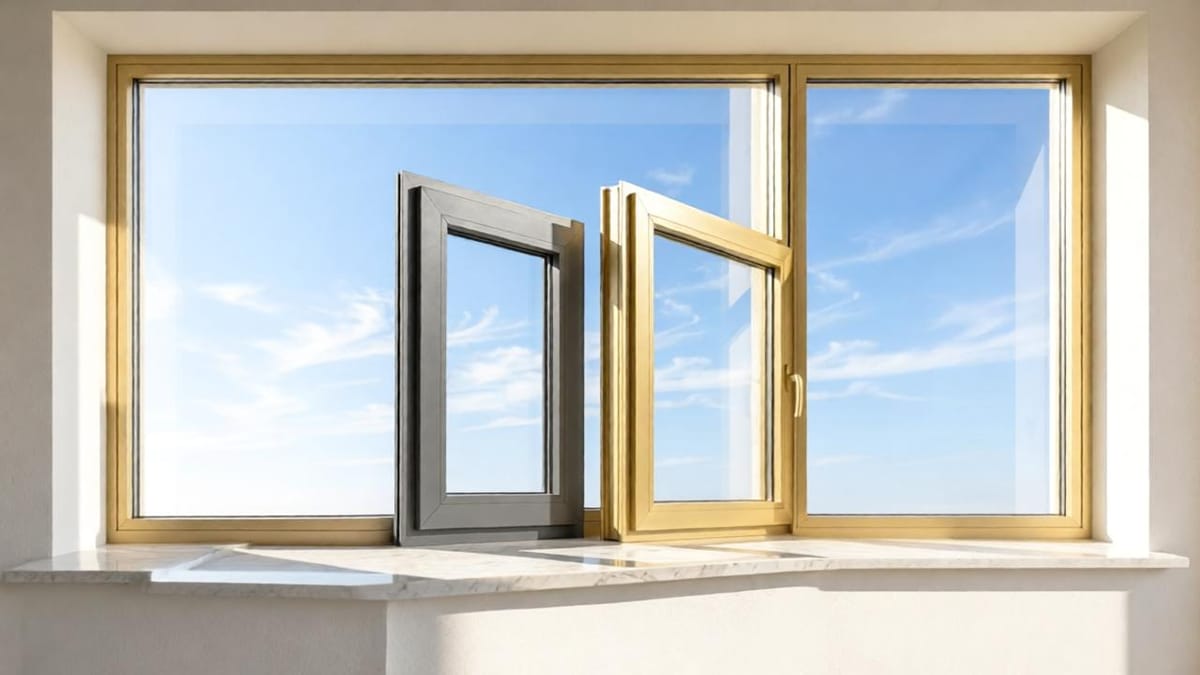
Selecting the optimal fenestration system requires balancing structural performance, thermal dynamics, long-term degradation, and upfront procurement budgets. The decision between unplasticized Polyvinyl Chloride (uPVC) and extruded aluminium frames impacts a building envelope's total U-factor, acoustic dampening, and architectural profile.
While consumer marketing often simplifies this debate to budget versus aesthetics, real-world field data presents a distinct set of engineering trade-offs. Thermally broken aluminium systems deliver high structural rigidity and ultra-slim sightlines, but demand higher capital expenditure. High-performance European multi-chambered uPVC delivers superior default thermal insulation and sound attenuation at a lower initial cost per square meter.
This guide breaks down raw performance metrics, installation considerations, and total cost of ownership (TCO) models to help developers, architects, and homeowners select the correct profile type.
Key TakeawaysThermal Efficiency: Multi-chambered uPVC naturally resists heat transfer, achieving frame U-factors around 0.13 BTU/h·ft²·°F (1.2–1.3 W/m²K). Extruded aluminium requires continuous polyamide thermal breaks to reach competitive numbers (1.8–3.2 W/m²K).Structural & Design Limits: Aluminium's high yield strength allows for frame sightlines half the width of uPVC, supporting floor-to-ceiling glass assemblies up to 10 feet tall without excessive profile flexing.Lifecycle Expectations: Anodized or powder-coated aluminium frames carry a service life of 45–50 years. Steel-reinforced uPVC offers a reliable 25–30 year lifespan, excelling in high-salinity coastal environments where bare metal edges risk oxidization.Cost Metrics: Standard uPVC runs $600–$1,100 per m² installed. Thermally broken double-glazed aluminium commands $900–$1,500+ per m², representing a 20% to 90% capital premium.
Material Fundamentals & Structural Profiles
Understanding frame engineering requires analyzing how raw compounds are manufactured and structural loads are distributed.
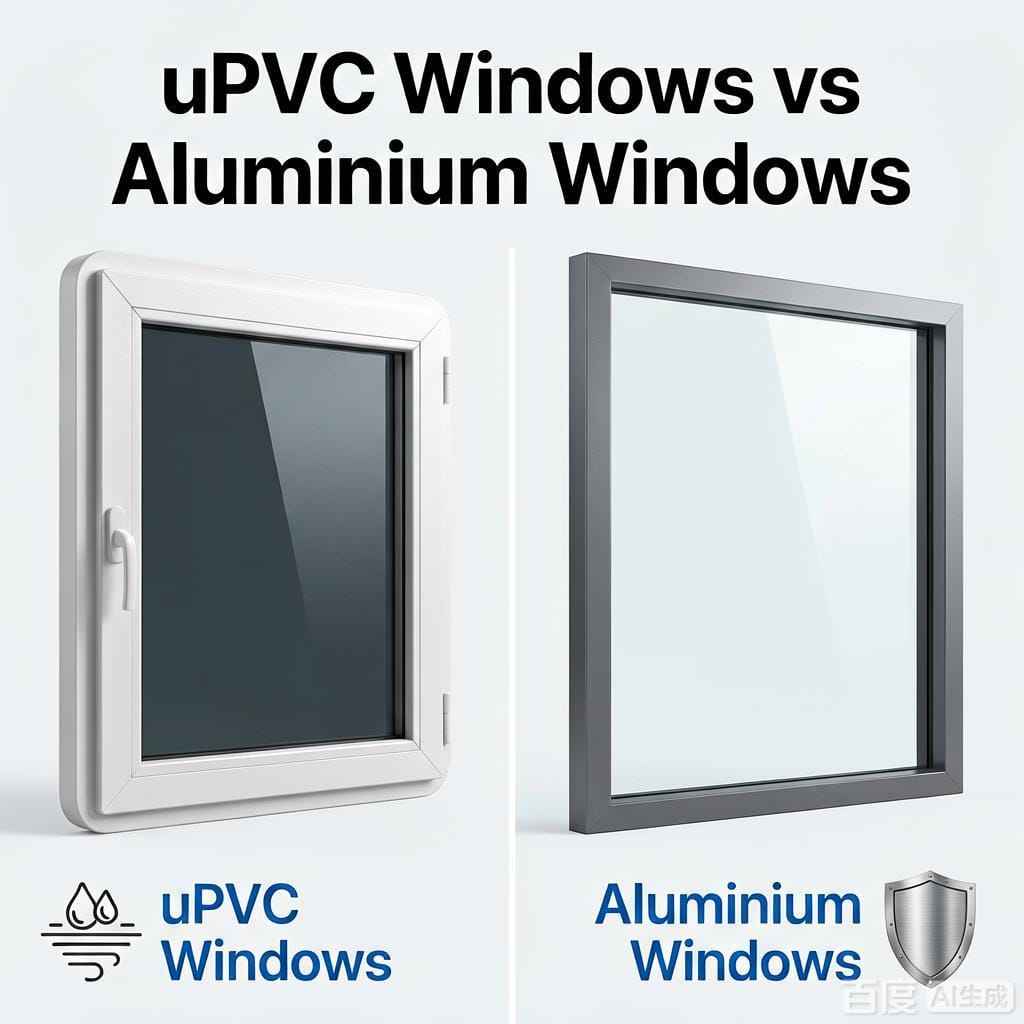
uPVC Profile (Multi-Chamber)
Natural thermal insulator with internal structural steel support.
Thermally Broken Aluminium
High structural strength interrupted by Polyamide thermal barrier.
Unplasticized Polyvinyl Chloride (uPVC)
uPVC is an unplasticized polymer extruded into rigid, hollow multi-chambered designs. These isolated internal air pockets create a natural barrier against thermal conduction and acoustic wave propagation. Because virgin uPVC lacks internal bending strength under large wind loads, premium modern profiles incorporate internal galvanized steel box channels to ensure dimensional stability.
Extruded Architectural Aluminium
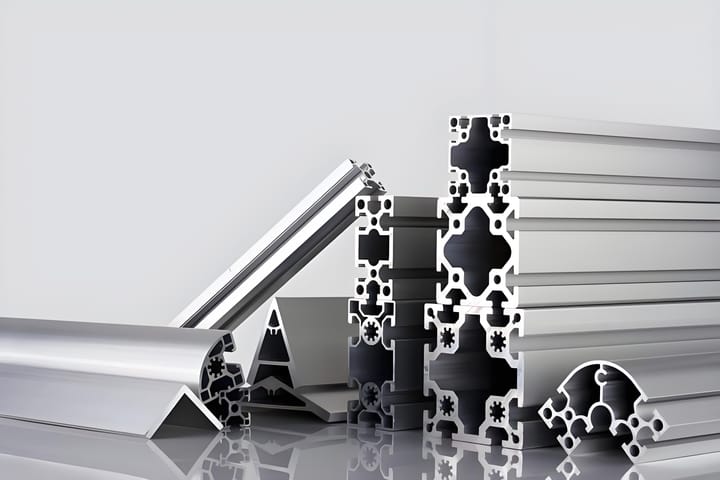
Aluminium profiles are extruded using high-strength alloys (typically 6063-T5 or 6063-T6). Due to aluminium’s high inherent thermal conductivity (~200 W/m·K), raw aluminum frames rapidly transfer heat between interior and exterior spaces.
To satisfy modern energy codes, modern architectural profiles utilize thermal break technology: continuous structural Polyamide 66 (PA66) glass-fiber reinforced struts mechanically crimped between the inner and outer aluminum extrusions. This structural break interrupts heat transfer while preserving structural load capabilities.
Technical Performance Matrix
| Performance Category | uPVC Windows (Steel Reinforced) | Thermally Broken Aluminium |
| Average Service Lifespan | 25 – 30 Years | 45 – 50+ Years |
| Typical Frame U-Value | 1.2 – 1.3 W/m²K (0.13 U-Factor) | 1.8 – 3.2 W/m²K (0.16–0.22 U-Factor) |
| Acoustic Reduction Index | High (30 – 40 dB base reduction) | Moderate-High (Requires acoustic glass) |
| Corrosion / Salt Resistance | Impervious (Ideal for coastlines) | High (Requires Qualicoat powder coat) |
| Sightline Width | Wider profiles (Thicker frames) | Ultra-slim sightlines |
| Installed Unit Cost Range | $600 – $1,100 per m² | $900 – $1,500+ per m² |
| Recyclability Footprint | Up to 7 cycles (Lower initial energy) | Endlessly recyclable (High initial melt energy) |
Thermal Mechanics & Energy Efficiency
Up to 40% of a building's overall HVAC loss occurs through standard fenestration openings. Choosing between these materials requires reviewing heat transfer pathways across the frame assembly.
- uPVC Performance: uPVC displays extremely low thermal conductivity. Its multi-chamber design traps stagnant air pockets, making the frame profile an effective insulator without needing supplemental thermal inserts.
- Aluminium Performance: Standard non-thermal aluminium yields poor U-values ($5.8 - 6.5 \text{ W/m}^2\text{K}$). Installing a minimum 24mm to 34mm polyamide thermal break drops the frame U-value to competitive levels ($1.8 - 3.2 \text{ W/m}^2\text{K}$).
Pro Tip: In larger window openings, glass area dominates thermal calculations. Pairing a thermally broken aluminium frame with high-performance triple-pane, Low-E glass units featuring warm-edge spacers can bridge the insulation gap with standard uPVC
Structural Integrity, Environmental Exposure, & Site Logistics
When specifying materials for high-exposure environments or large-scale jobsites, engineering factors extend beyond simple performance numbers.
Direct Solar Radiation & Thermal Expansion
In high-heat regions (e.g., Texas, Florida, or Australia) or on south/west facing walls with dark frame finishes (RAL 7016 Anthracite Gray or Jet Black), uPVC experiences high thermal expansion coefficients. Dark uPVC under unshaded sun exposure can reach core temperatures causing frame warping, sash sagging, or operation binding. Powder-coated aluminium handles thermal expansion more effectively, exhibiting three times greater resistance to heat warping under identical conditions.
Coastal Environments
uPVC is chemically non-reactive and unaffected by salt air spray, making it highly durable for coastal installations. While anodized or marine-grade powder-coated aluminium performs well, chipped edges, compromised miter joints, or damaged screw penetrations can trigger localized oxidation under severe salt exposure
Jobsite Handling & Lead Times
- Lead Times: Extruded aluminium systems often require 1 to 2 additional weeks in production relative to uPVC lines.
- Freight & Repairs: uPVC frames feature protective foil wrapping; deep surface scratches on foiled uPVC are difficult to repair on-site. Powder-coated aluminium offers higher scratch resistance, and minor surface defects can be touch-finished in the field.
- Nailing Flanges: For U.S. wood-frame construction methods, both European-style uPVC and aluminium profiles can be specified with integrated or clip-on factory nailing flanges (adding roughly 13% to unit costs), simplifying weatherproofing and flashing details.
When to Choose: Decision Criteria
Option A: Strict Budget & Standard Openings
Select Full uPVC Profile to maximize unit margin and default thermal value.
Option B: Large Spans (>8-10 ft) or Ultra-Slim Profile
Select Extruded Aluminium for high structural stiffness and slim sightlines.
Select uPVC Windows When:
- Targeting Maximum Cost Efficiency: Upfront material budgets require strict allocation while maintaining low U-factors.
- Prioritizing Native Acoustic Attenuation: The build sits near heavy urban traffic or flight paths where multi-chambered frame dampening is beneficial.
- Building in High-Salinity Marine Conditions: Oceanfront properties where salt spray breaks down exposed metal edges over time.
- Standard Residential Sizes: The architectural plans utilize standard size windows and traditional double-hung, casement, or European tilt-and-turn configurations.
Select Thermally Broken Aluminium Windows When:
- Designing Modern Minimalist Architectural Styles: Project plans demand ultra-slim frame sightlines to maximize total glass surface area and natural daylighting.
- Executing Expansive Fenestration Units: The design calls for multi-slide pocket doors, curtain walls, or window walls reaching heights over 8 to 10 feet.
- Utilizing Dark Exterior Finishes in Extreme Sun Climates: Frame colors such as black or dark bronze will face high UV loads and direct thermal radiation.
- Targeting Long-Term Asset Retention: Commercial builds or luxury spec homes where a 50-year structural service life elevates property valuation.
Frequently Asked Questions
1. Are thermally broken aluminium windows prone to condensation?
Older, uninsulated aluminium frames frequently developed condensation due to direct cold conduction through the metal. Modern architectural aluminium frames incorporate continuous polyamide thermal breaks that separate the internal and external aluminum extrusions. This keeps the interior frame surface near room temperature, eliminating condensation risk under normal indoor humidity levels.
2. How do uPVC and aluminium frames compare on security?
Both materials deliver high security levels when paired with multi-point locking hardware that engages the sash into the frame at multiple locations. Aluminium features higher native shear and impact strength. Quality uPVC frames match this performance by embedding heavy galvanized box-steel profiles inside the center extrusion chamber to resist forced entry attempts.
3. Does uPVC yellow or degrade under long-term UV exposure?
Modern multi-chambered uPVC profiles incorporate titanium dioxide ($\text{TiO}_2$) stabilizers and UV-resistant exterior foils. These additives prevent the discolouration, chalking, and brittleness common in early-generation vinyl windows installed during the late 20th century.
4. Which frame material provides superior acoustic dampening?
uPVC naturally dampens sound vibrations due to its lower density and multi-chambered structural profile. Aluminium can achieve equivalent sound transmission class (STC) ratings, but requires specialized acoustic glass assemblies (such as asymmetrical double glazing or laminated glass interlayers) to offset metal's natural vibration conduction.
5. What is the most cost-effective strategy for luxury spec homes?
Many builders use a hybrid strategy: specify heavy-duty thermally broken aluminium for high-visibility elevations, grand entrance assemblies, and large patio sliders, while utilizing color-matched premium uPVC for standard bedroom and secondary windows. This maintains a premium architectural look while optimizing construction margins.

Comments ()