
How to Prevent Aluminum Coil Oxidation During Ocean Freight
Preventing surface corrosion on exported aluminum rolls requires strict climate protection standards during maritime transit. Ocean freight exposes metal cargo to high humidity, temperature drops, and sea salt vapor, which frequently leads to white rust band defects along coil edges.
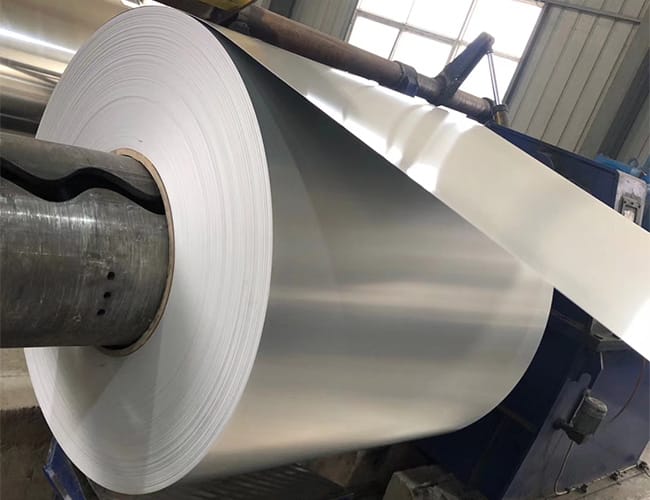
Last month, I had to sort out a nightmare scenario with a shipment bound for Dubai. A new customer sent out 5 tons of 3003 aluminum coils without proper moisture-proof packaging. By the time the container arrived at Jebel Ali port, condensation had crept into the edges, creating a 10mm wide oxidation band along the sides. That tiny oversight cost them dearly—the entire batch had to be discounted by 30% just to sell it off.
When you are shipping aluminum coils across the ocean, high humidity, salt spray, and standard temperature fluctuations inside a steel container are your worst enemies. Water gets trapped between the layers, runs out of oxygen, and triggers severe white rust (aluminum hydroxide corrosion). Having handled ocean freight for years, I can tell you that preventing this isn't about luck; it's about rigorous, standardized packaging steps.
3 Critical Packaging Details for Ocean Freight
1. Desiccant Allocation inside the Container
Never rely on standard silica gel for sea travel—it saturates too quickly in tropical waters. You need calcium chloride desiccants, which absorb up to 300% of their own weight in moisture. For a standard 20-foot container carrying aluminum coils, place at least three 200g calcium chloride desiccant bags. Hang them near the top air vents and secure one close to the floor near the container door. This active moisture control keeps the relative humidity inside the container well below the 60% threshold where condensation forms.
2. Moisture Barriers for Coil End-Faces
The edges and end-faces of a coiled aluminum sheet are the most vulnerable points because capillary action draws trapped water deep into the roll. To block this, every single end-face must be sealed with a 0.1mm thick waterproof PE (polyethylene) film before applying steel or plastic strapping. The film must extend over the outer edges by at least 50mm, folded neatly and taped tightly. This creates an airtight physical barrier against seawater vapor and direct ocean mist.
3. Cushioning and Separating Stacks
When stacking or placing aluminum coils side by side, direct metal-to-metal contact or hard wooden friction will ruin the surface finish and break protective coatings. Use 5mm thick EPE (Expanded Polyethylene) foam sheets placed directly between every roll and beneath the timber cradles. The EPE foam acts as a shock absorber against ship vibrations during transit while simultaneously insulating the coils from temperature transfers through the timber runners.
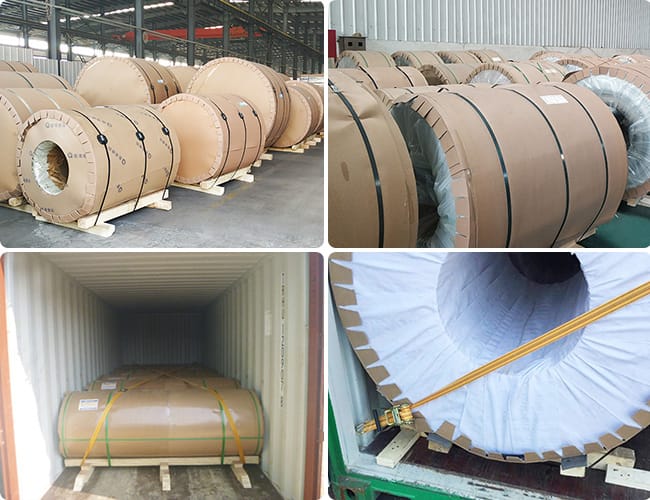
Our Standard Protocol for Clients: For all our clients shipping under FOB Zhengzhou terms, we automatically include a inner layer of VCI (Vapor Corrosion Inhibitor) anti-rust paper packaging as a standard procedure—at absolutely no extra charge to you.
Frequently Asked Questions (FAQ)
What is the main cause of aluminum coil oxidation during sea transport?
The primary cause is condensation, often referred to as "container rain." Temperature variations between day and night cause air moisture to condense inside the sealed container. When liquid water gets trapped between aluminum layers in an anaerobic (oxygen-poor) environment, rapid galvanic reaction and surface oxidation occur.
Why is VCI paper better than standard plastic wrap?
VCI paper releases invisible, odorless corrosion-inhibiting vapors that active settle on the metal surface. These vapors reach tiny crevices and gaps that plastic wraps cannot physically seal, forming a microscopic protective layer that prevents electrochemical corrosion.
How much desiccant is required per 20ft container for aluminum shipments?
For ocean routes across high-humidity zones, we recommend using at least 600g of high-absorption calcium chloride desiccant (typically split into three 200g bags) per 20ft container to maintain safe humidity levels throughout the voyage.

Comments ()